Beyond translation: rethinking inclusive volunteering
April 22, 2026
Volunteering plays a vital role in how our community connects and supports one another. But across Ballarat and the Grampians region, participation does not always reflect the diversity of the people who live here.
As our community becomes more culturally and linguistically diverse, this presents both a challenge and an opportunity for organisations who involve volunteers.
For many, the starting point has been language. Translate materials, simplify wording, and the barrier is removed. But what we are hearing from communities is that the challenge runs deeper.
Translation alone is not enough.
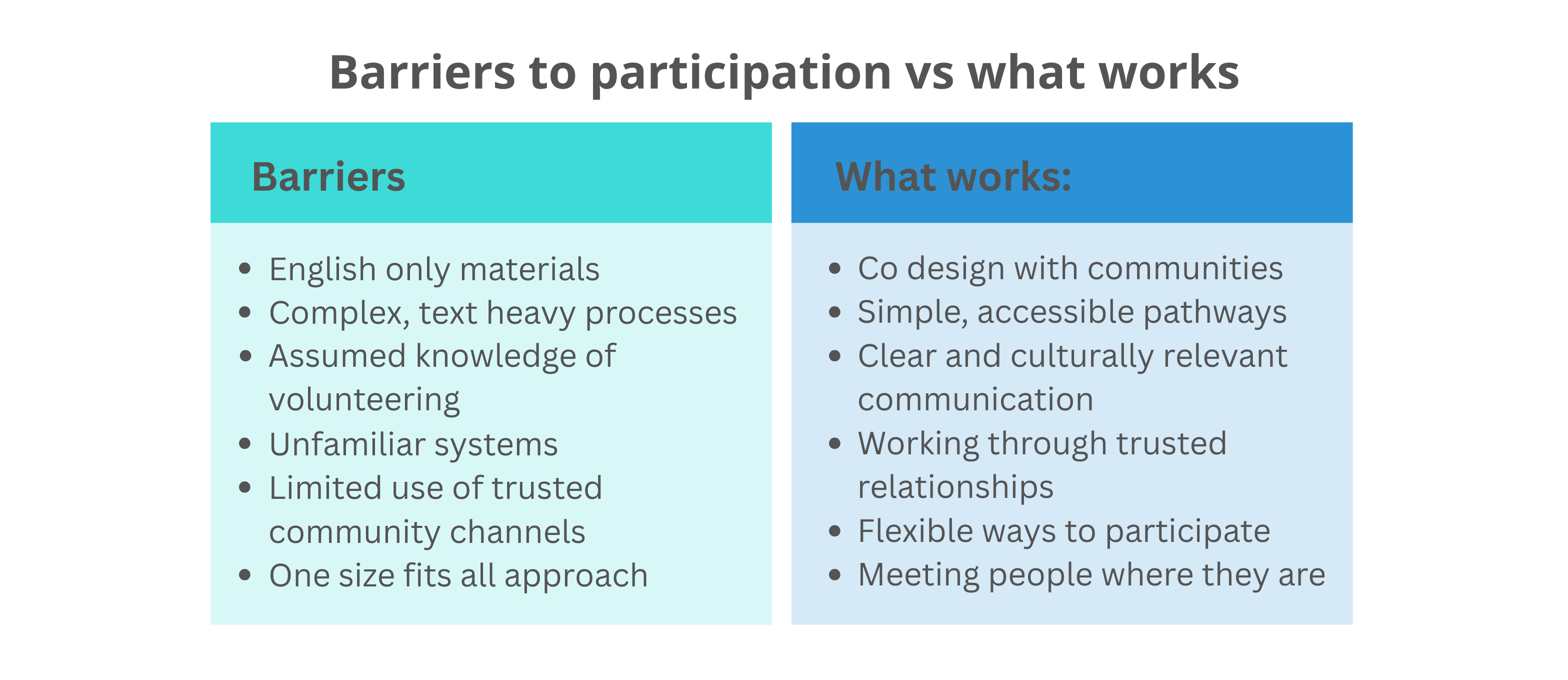
Many volunteering systems are built on assumptions. That people are confident navigating formal processes. That they understand what volunteering looks like. That they are comfortable engaging in English first.
For newly arrived migrants and refugees, these assumptions can create real barriers. Not because people are unwilling to contribute, but because the systems are not designed with them in mind.
Moving beyond assumptions
Through our work with multicultural communities in Ballarat, a number of common experiences have emerged.
People often feel that volunteering is something you do after you have settled in. That you need to understand the system first. That you need to fit in before you can contribute.
These messages are rarely stated directly, but they are felt through the way opportunities are presented.
At the same time, many communities already have strong traditions of helping others. Support is often informal, relational and ongoing. It happens through family networks, cultural groups and community connections.
This is contribution. It just does not always look like formal volunteering.
The opportunity is not to create participation from scratch, but to recognise and connect with what already exists.
Designing for inclusion
What we have learned is that inclusion does not happen by default. It needs to be intentional.
This means shifting the focus from translating information to designing systems that are accessible, welcoming and relevant from the start.
These insights offer practical ways organisations can rethink how they design and promote volunteering opportunities.
A few simple shifts can make a difference.
- Building relationships before recruitment.
- Working with trusted community leaders and networks.
- Keeping processes simple and reducing the effort required to participate.
- Allowing flexible pathways rather than expecting people to fit a single model.
- Making sure people can see themselves reflected in stories, images and opportunities.
It also means rethinking how we engage with communities.
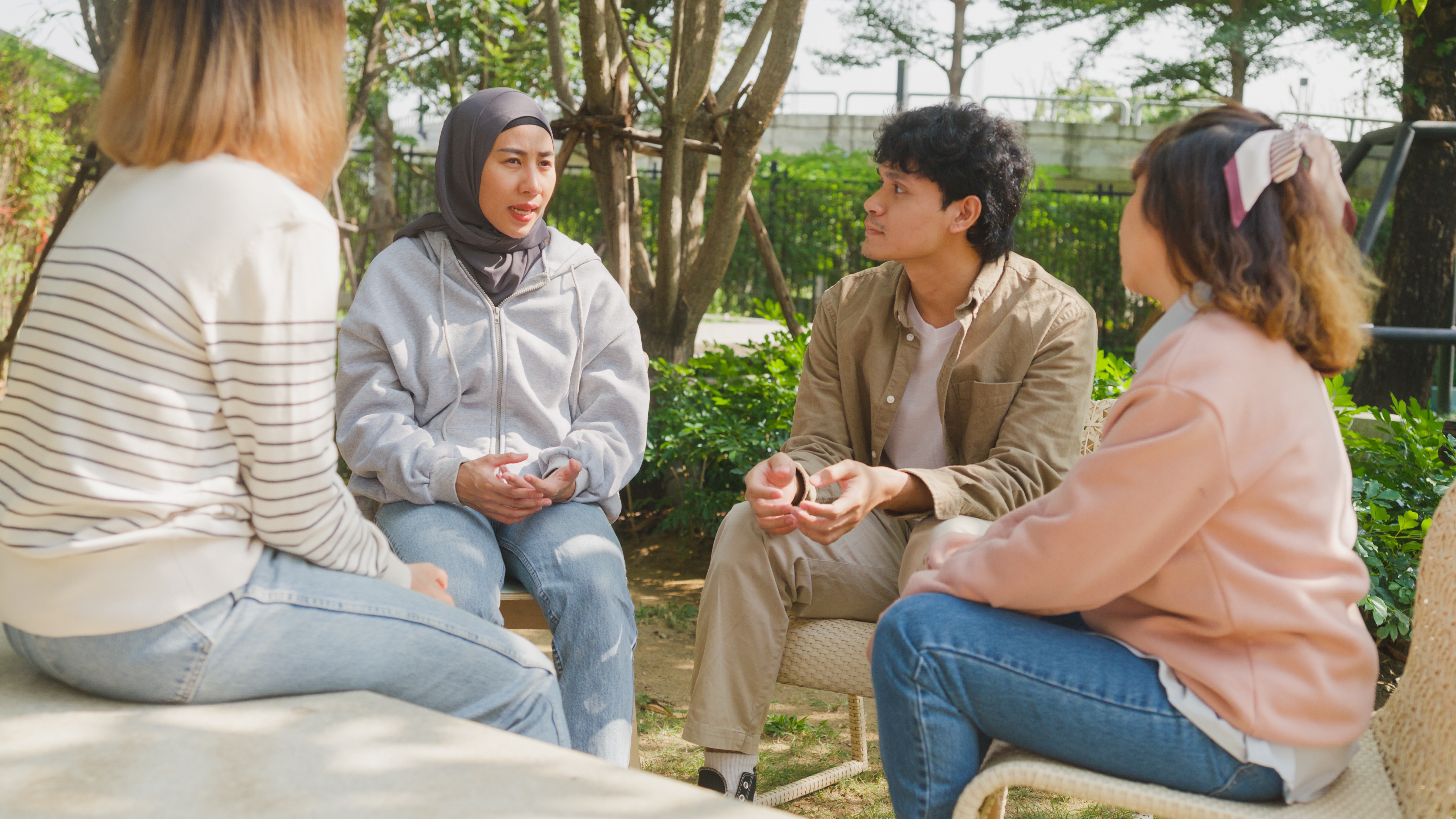
Rather than asking people to come to us, we need to go to where trust already exists. This might be through local cultural groups, faith communities or informal gatherings. Listening in these spaces builds understanding and reduces the burden on those we are trying to include.
Making participation meaningful
One of the strongest messages we heard is that engagement needs to be useful.
Too often, people are asked to share their views but do not see what changes as a result. Over time, this can feel extractive and lead to disengagement.
If we are asking for input, we need to close the loop. Share what we heard. Explain what changed. Be honest about what did not.
When people can see that their contribution matters, trust grows.
Building connection
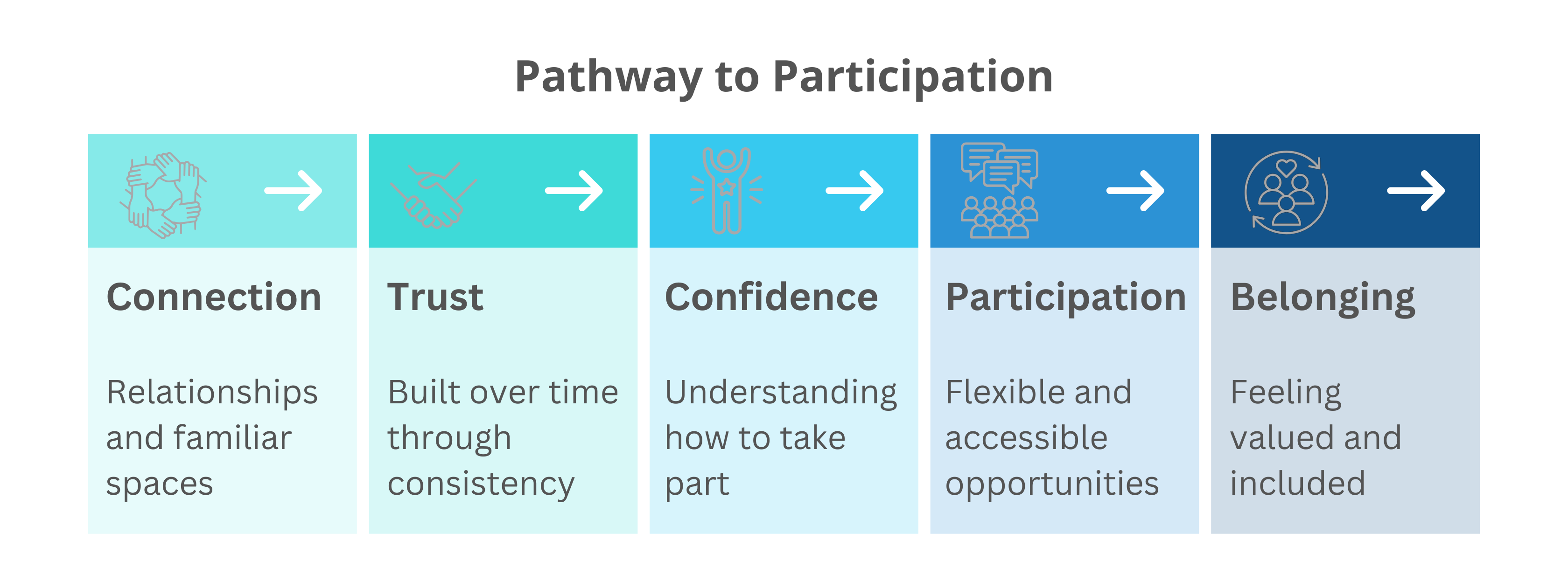
Inclusive volunteering is not simply about increasing numbers. It is about building connection, confidence and belonging.
Many multicultural communities already have strong connections within their own networks. What is often missing are the bridges between groups.
Creating these connections takes time. It might look like partnering on a community event, showing up regularly, or simply being present in spaces where relationships can grow.
These small, consistent actions help build familiarity and trust.
Why this matters
Volunteering plays an important role in how communities function. It supports services, strengthens relationships and creates opportunities for people to connect.
If volunteering systems are designed around a narrow set of assumptions, they will continue to exclude people who have a lot to offer.
But when inclusion is built in from the start, participation expands. Trust deepens. Communities become stronger and more connected.
Beyond translation, the focus shifts from removing a single barrier to rethinking the system as a whole.
That is where real change happens.
Continue reading our latest news and stories

We work on Wadawurrung land
The Ballarat Foundation acknowledges the Wadawurrung people, the traditional owners of the lands and waterways in our region. We recognise their diversity, resilience, and the ongoing place that Aboriginal and Torres Strait Islander people hold in our communities. We pay our respects to the Elders, both past and present, and commit to working together in the spirit of mutual understanding, respect and reconciliation.
The Ballarat Foundation is committed to fostering a diverse, equitable and inclusive community where everyone is welcomed, respected and empowered to thrive.