Celebrating Ballarat’s Great Women 2025
September 11, 2025
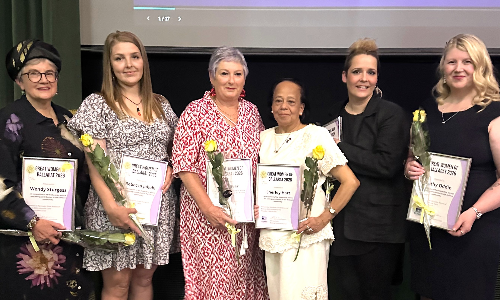
In March 2025, six remarkable women were honoured for their leadership, vision, and service to our community through Ballarat’s Great Women. Each of these honourees has contributed in unique and powerful ways, leaving a legacy of inclusion, compassion, empowerment, cultural connection and innovation.
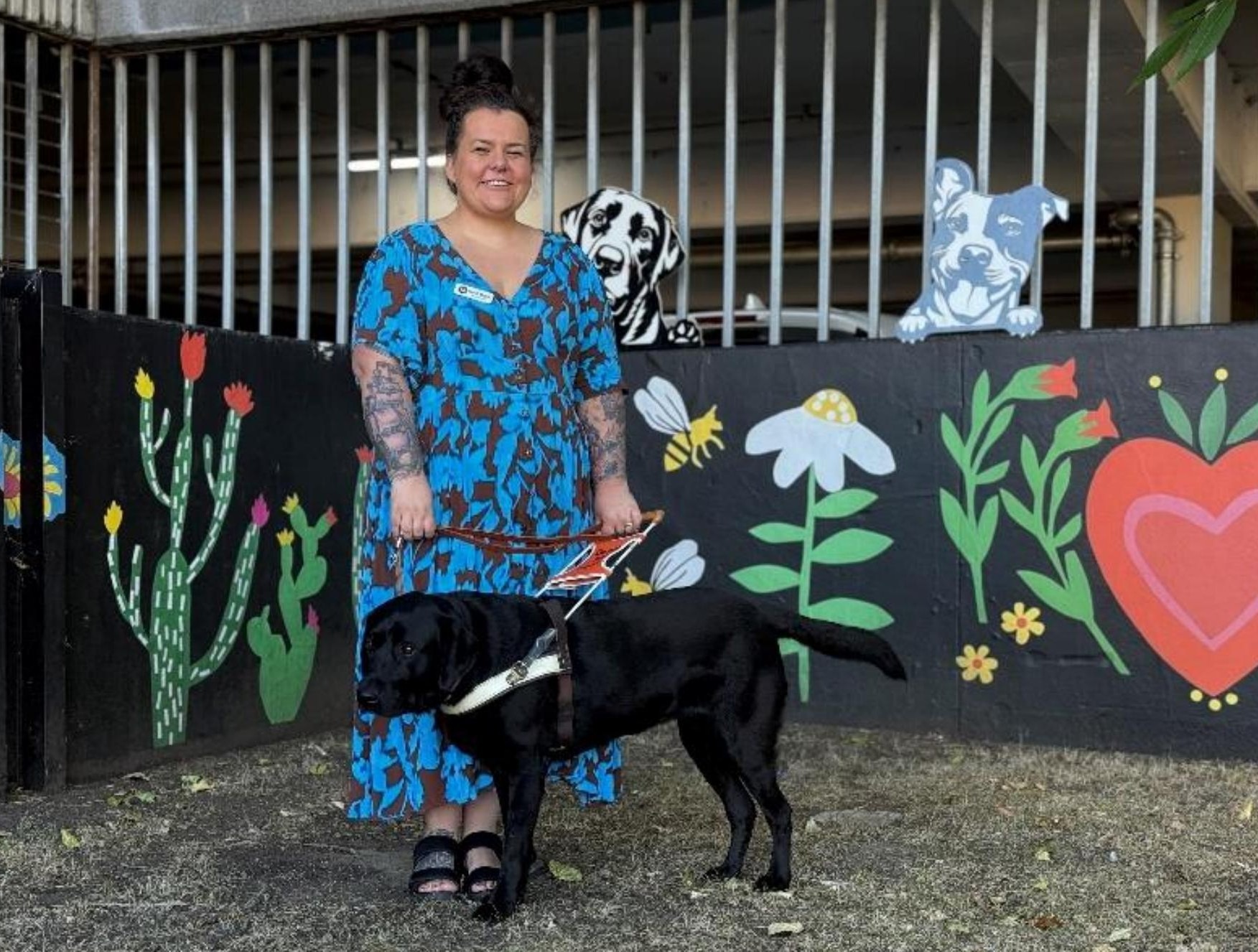
Heidi Biggin
Championing inclusion for disabled women
Photo and words: Miriam Litwin
Heidi Biggin unexpectedly acquired a disability in 2010 after she was diagnosed with a rare neurological disorder. It sometimes affects her speech and balance, and it left her permanently legally blind. Following her diagnosis, Ms Biggin said she saw a need in the community for a role-model for blind women.
"It's been 15 years now since I've been blind, the first year was probably the hardest not seeing myself in the community or in media as well," she said. "I remember the first time I used a white cane I stayed home for six weeks after that because I was so almost shameful of my disability and I thought everyone was looking at me, because they were."
“I almost became the person I wanted back then… it was born out of a need for me but then I see the difference it makes in the community.” Ms Biggin is passionate about helping organisations represent their diverse communities and is a qualified access consultant.
She has been a member of the City of Ballarat's disability advisory committee since June 2021 and helped create the first assistance dog relieving station in Ballarat to improve accessibility for people who use assistance animals.
"I need to take Freya to the toilet every three of four hours, and she needs either grass or stone," Ms Biggin said. "People just think I'm a pet owner taking my dog randomly to the toilet in the middle of town and they don't like it.”
"Having a safe space where people know she's a guide dog, I have not been hassled once, it's perfect."
An assistance dog relieving station includes a three-by-three-metre square of grass or stone, and Ms Biggin said she would like to see legislation introduced to make the facilities mandatory at train stations, hospitals, police stations and airports.
The disability advisory committee recommended including a relieving area in the Ballarat Train Station upgrade, however, this was not part of the final project.
Ms Biggin said particularly for women with disabilities, finding a place for their assistance dog to relieve themselves can be dangerous. "At the train station, the closest grassed area is in Camp Street where people are picnicking, where it's dark at night and you have to go down a dark alley," she said.
Women with disabilities and physical disabilities are four times more likely than the average woman to be assaulted. "If I'm at the train station late at night and I have to take Freya to the toilet down at Camp Street, I'm advertising that I can't see you creep up on me, I can't identify your face in court."
"Having a safe space where people know she's a guide dog, I have not been hassled once, it's perfect."
Heidi Biggin
Maureen Doonan
Compassion and community for refugees
Photo and words: Miriam Litwin
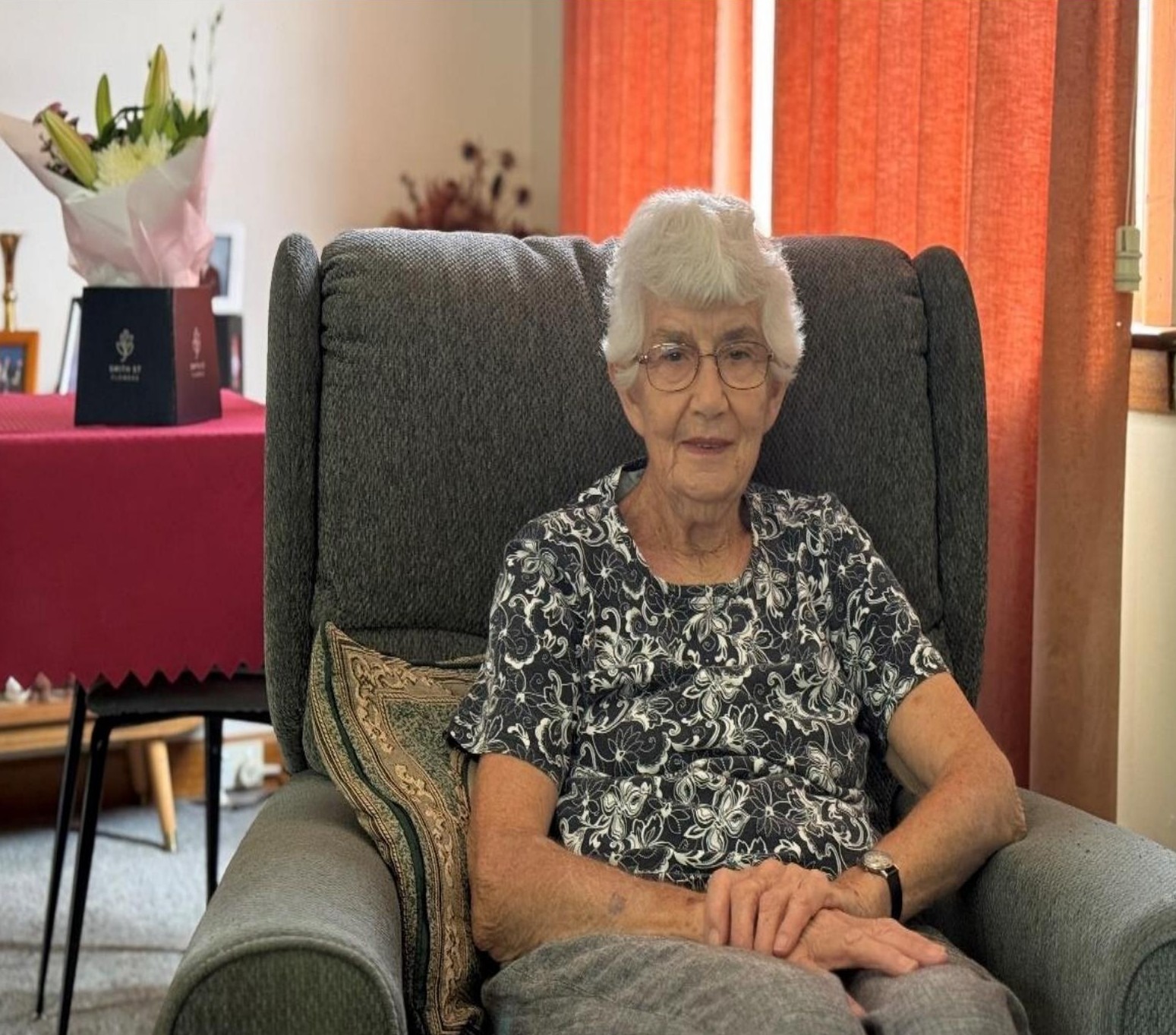
Building community is important to Ballarat’s Maureen Doonan. She is an advocate for refugees and people seeking asylum, fundraising and campaigning to provide practical support. Ms Doonan began to provide accommodation in her home for refugees and people seeking asylum in 2012.
She had been offering university students board, but when one student pulled out at the last minute, Ms Doonan saw the opportunity to house a refugee who had just received his visa.
“I said to him, if you want to come around to my place and have a look you could perhaps stay there because my boarder is not coming,” she said. “From there, one left and another one came in.”
Ms Doonan, who is originally from near Manchester in England, migrated to Australia with her family when she was 12.
She is a member of Rural Australians for Refugees, Ballarat Refugee and Asylum Seeker Network, a founding member of Ballarat Afghan Action Group, and has protested for more than a decade for refugee acceptance.
Ms Doonan teaches refugees and asylum seekers how to drive, which she said is a crucial skill in Ballarat.
“I teach the young women to drive because they are not allowed to drive or not able to drive in their own country, and then they want to go to work,” she said.
“In Ballarat public transport doesn’t quite fit.”
Ms Doonan urged the community to show compassion to refugees and asylum seekers and consider barriers they may be facing. “Those who’ve been here 10, 12 years and still don’t have a permanent visa, that’s just not on,” she said.
“These people want to work... people say they’re taking our jobs, but they’re jobs that we won’t do. They came here believing that we were a welcoming country that we used to be and got such a shock when they realised the treatment they were being put through.”
“I teach the young women to drive because they are not allowed to drive or not able to drive in their own country, and then they want to go to work.”
Maureen Doonan
Marianne Hendron
A desire to create change
Photo and words: Miriam Litwin
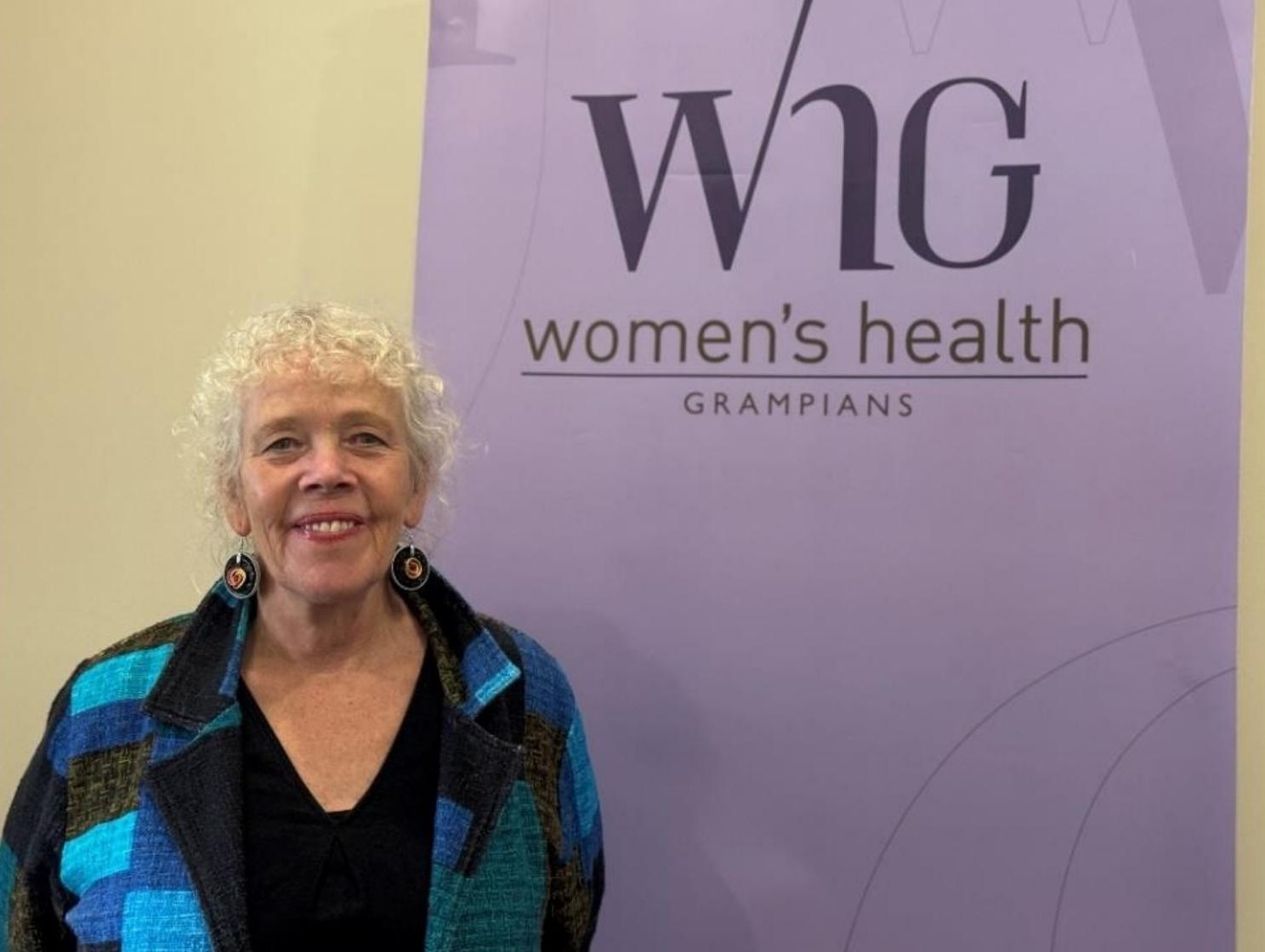
Women’s Health Grampians CEO Marianne Hendron said she strives to amplify the voices of marginalised women, and empower them.
"What I have endeavoured to do in this job and other jobs is to be very strongly focused on equity," she said. "By that I mean not taking the view that we are equal and therefore should all be able to take advantage of what's out there, but to recognise the significant barriers that a lot of women face."
Growing up during The Troubles conflict in Ireland, Ms Hendron said she was driven to create change.
"I guess that gave me a strong sense of what civil rights was about, and I was quite young at that time but very aware of the movement around civil rights in Ireland and the risks that people took in terms of trying to highlight the big inequities," she said.
"It gave me a sense of not taking anything for granted and how important it is to speak up. When I went to university in Dublin there was no access to contraception, there was no divorce, there was no access to abortion."
Ms Hendron came to Australia in 1992 and lived in the Wimmera where she saw the disadvantages rural women faced. "We were in a fairly rural community, childcare was very difficult to access, and I was keen to contribute to the workforce," she said.
"I got an insight into the variations across this state and the country more broadly."
Ms Hendron became the CEO of Women's Health Grampians in 2015 and has engaged leaders in local government, health, sport and business sectors to form a collective approach to the prevention of family and gendered violence through the Grampians Communities of Respect and Equality (CoRE) Alliance.
"I've been extremely fortunate to work with an amazing team so what has taken place has been very much a team effort," she said.
"We launched the CoRE Alliance back in 2016. I think the model was a good one and I also think it was timely because the issue of family violence was quite top-of-mind for a lot of people. I also think it's a reflection of our community that so many people wanted to come on board with that."
After three high-profile cases of violence against women in the Ballarat community last year, Ms Hendron said the implementation of the State Government's saturation model is an important opportunity for change.
"There is a huge opportunity for us as a community to change the dial with regard to gendered violence," she said. "There arose from that a determination to say this isn't who we are, this isn't the community we want to be or have a reputation for."
"There is a huge opportunity for us as a community to change the dial with regard to gendered violence. There arose from that a determination to say this isn't who we are, this isn't the community we want to be or have a reputation for."
Marianne Hendron
Natalie Illingworth
Empowering women with education
Photo and words: Tim Bottams
Social service is something Natalie Illingworth claims she "fell into." Returning to her home town after almost three years travelling the globe during her early 20s, Ms Illingworth had no intention of staying very long in Ballarat.
Her plans changed when she met her now-husband, after which she took on a role at the Department of Health and Human Services – now the Department of Families, Fairness and Housing – where she assisted people dealing with homelessness and housing issues.
"I was there for seven years ... and ended up in a team management position," she said. "I was lucky enough to find the sector that really aligned with me. Assisting people that needed help was something I ended up loving.
"I just enjoy helping people find a pathway to a better lifestyle so they can lead a better life. It's just inspiring when you meet those people who've done it tough but they can see the light at the end of the tunnel."
After maternity leave, Ms Illingworth returned to the social services sector with a stint at Catholic Care before briefly going back to the department. While balancing part-time work with being at home with her children, she completed a Bachelor of Community and Human Services at Federation University during the pandemic. It was in this period that a new calling emerged.
"I was studying, working and home schooling my kids, and I was all too aware of the circumstances that women experiencing family and domestic violence would be living at that time," she said.
"Generally, in the past, they'd have had the opportunity to get out of the house, to go to work, or interact with other people, and their children could've gone to school. Obviously, through COVID we couldn't do those things. So, I was sitting at home with this mental turmoil thinking about the women and children without an opportunity to vacate that space."
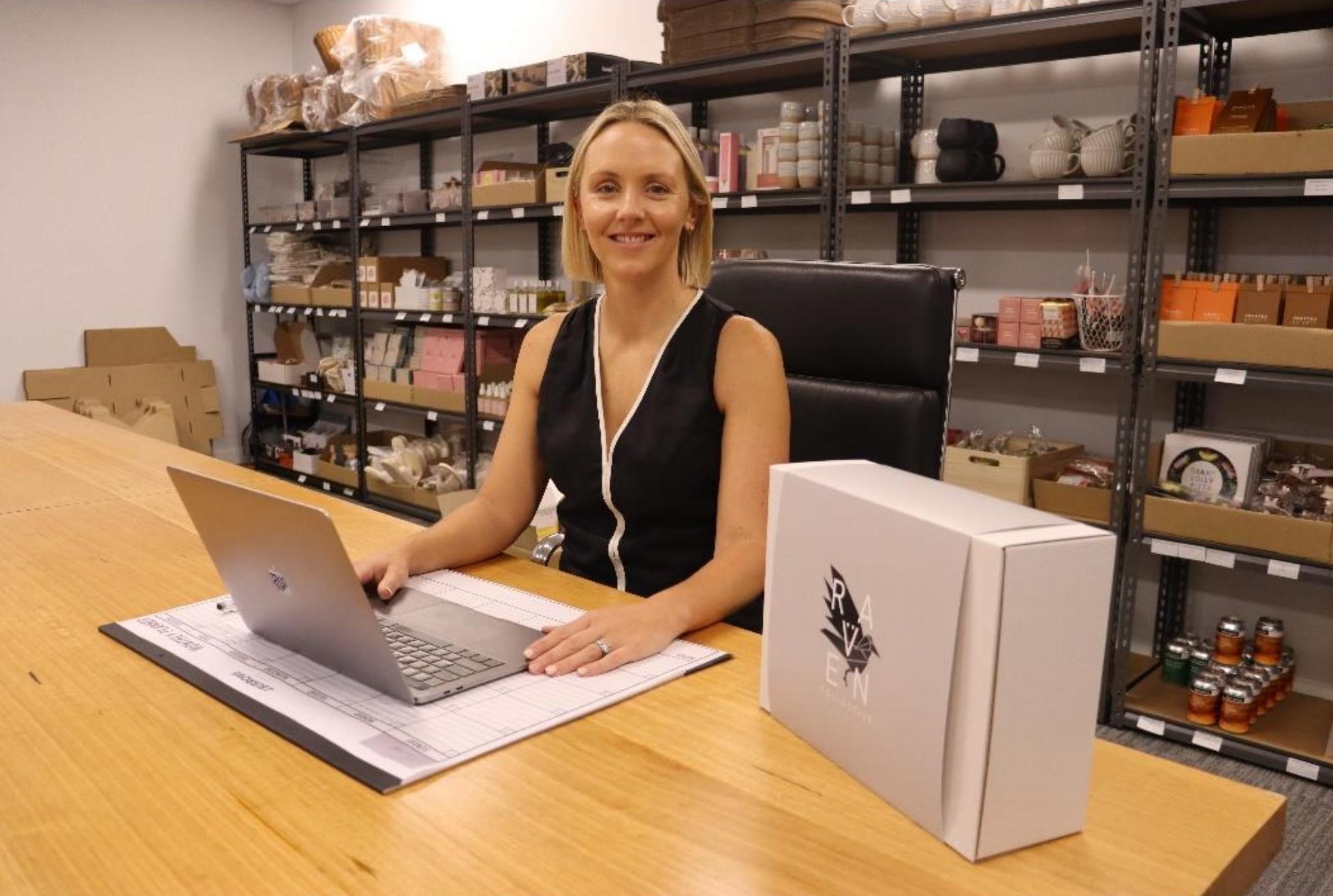
That thought led Ms Illingworth to develop Raven Collective Services and Training in 2020, a non-profit aimed at providing women with the means of re-integrating into the workforce following family and domestic violence. As well as a 10-week practical training and education program, the organisation also provides gift hamper bags packed by participants.
"For me, the gap in the system is not around crisis support," Ms Illingworth said. "It's about what comes next. We're all too aware the number one cause of homelessness for women in Australia is escaping an abusive relationship.
"That's how I came up with this idea that we have to teach these women to become financially independent and give them opportunities and training so they can access and maintain ongoing opportunities and become self-sufficient."
"For me, the gap in the system is not around crisis support," Ms Illingworth said. "It's about what comes next. We're all too aware the number one cause of homelessness for women in Australia is escaping an abusive relationship."
Natalie Illingworth
Frances Salenga
Recognition for closing culture gap
Photo and words: Tim Bottams
For more than fifteen years, Frances Salenga has strived to create a more multicultural Ballarat. Growing up in the Philippines, Ms Salenga moved to the region in 2009 after migrating to Australia in 2003 with her family. She’s served as the City of Ballarat’s intercultural services coordinator since her tree-change.
Moving into a region with a “highly Anglo-Saxon” demographic, she said her goal was to help foster a more intercultural city.
“I’m very interested in people and community and I saw how it is to be a migrant in Australia so I thought I’d be best suited in a job where I can highlight multiculturalism,” she said.
“I saw people migrating here like doctors and nurses and contributing to the health sector which was very in need of staff at that time. I’m just a people person and I knew I could make a difference if I worked for the benefit of migrants and explore what their contribution in Australia can be and how they can make a difference.”
Prior to her migration, Ms Salenga previously taught anthropology and sociology at the Assumption College in the Philippines, where she also served as director of the institution’s Centre of Social Concern.
She said her love for culture and community stems from her time working as an election’s observer in the Asia Pacific region for United Nations during the mid-1980s, where she travelled to various countries to speak to people about election processes. “I kind of got interested with other cultures through that,” she said.
“We share the same schools, roads, public spaces; there’s no other way to promote harmony if we don’t educate each other and learn from each other. You can live in harmony despite differences in race, colour, and culture.”
Prior to her role across Ballarat’s multicultural sector, she supported the development of ethnic communities across five north-eastern regional Victorian local governments, including Wodonga, Wangaratta, Mansfield, Benalla, and Alpine Shire.
She said one of her proudest local achievements is helping steer a skilled migration program, which ran for five years from around 2017 and supported some 500 migrants to fill employment gaps across various sectors.
Additionally, she also helped develop the municipality’s ambassador program, which since 2009 has provided leadership training for 10 migrant participants across Ballarat each year. She also has helped steer the delivery of Harmony Festival, and helped establish the Intercultural Garden which launched in September.
Currently on long service leave, Ms Salenga aims to retire around October this year. She feels she’s left a good legacy for the next person to build on.
“It’s time to let other people lead the sector,” she said. “The foundation is there and I’m quite happy with the outcome. If you understand the plight of a migrant, you’ll be able to provide support mechanisms to enable them to be productive members of our society.”
“This job gave me that opportunity.”
“We share the same schools, roads, public spaces; there’s no other way to promote harmony if we don’t educate each other and learn from each other. You can live in harmony despite differences in race, colour, and culture.”
Frances Salenga
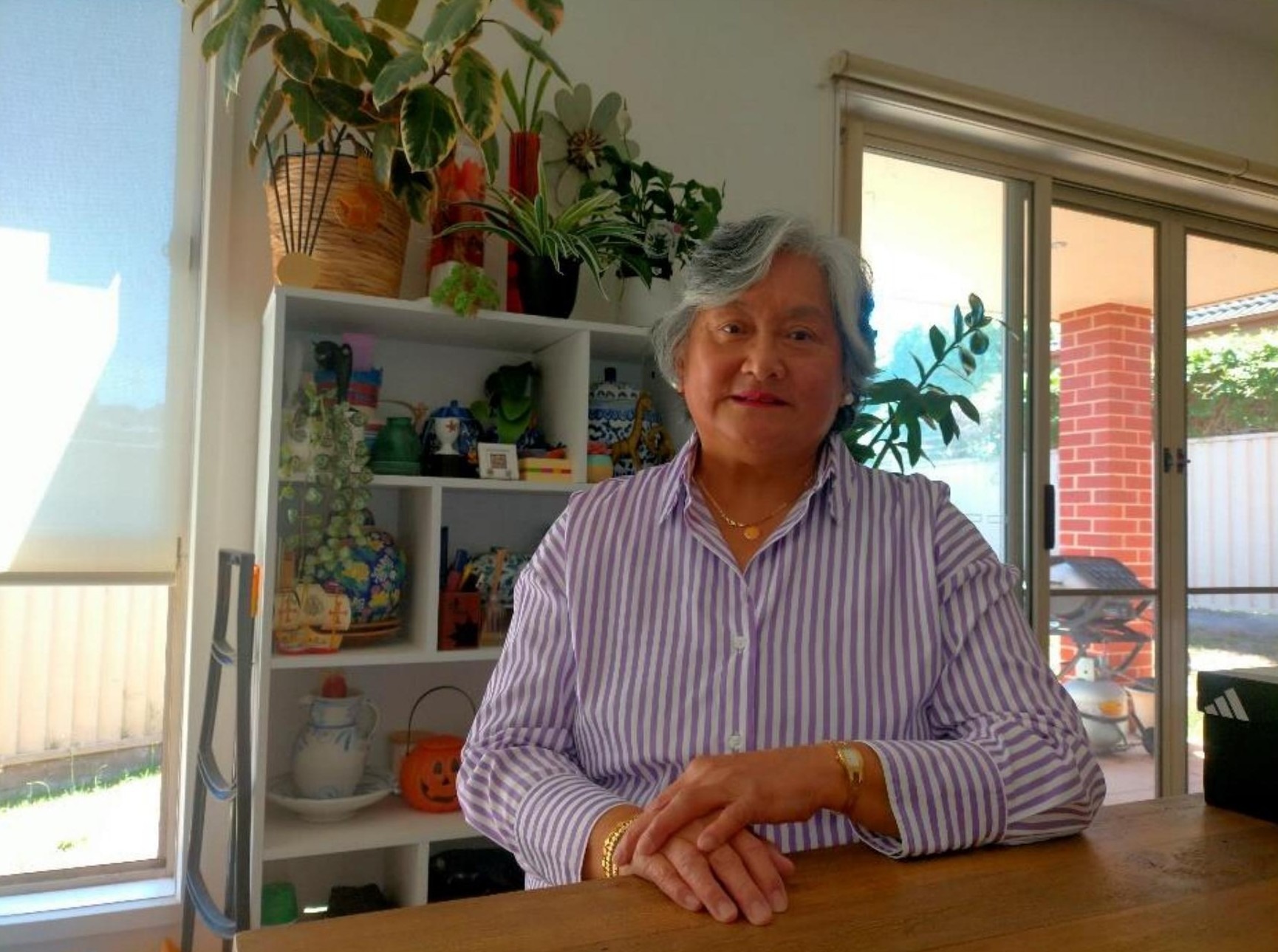
Pamella Taylor, OAM
Personal alarm creator recognised for global impact
Photo and words: Miriam Litwin
Pamella Taylor has always been a resourceful woman. In September 1957 she embarked on the trip of a lifetime, travelling in a Volkswagen Beetle with two girlfriends to Central Australia. Ms Taylor took a mechanics’ course before she left to ensure she knew how to change the oil or a flat tyre at a time where women were not expected to travel independently.
On the trip, she met Albert Namatjira and he autographed some prints of his works in exchange for her paying for his taxi fare back to Alice Springs. “I always wanted to see my own country before I travelled because so many people went rushing off overseas to see other countries,” Ms Taylor said.
“I think my mother was a very adventurous person, she was a country woman … and I think I inherited that sort of adventure from my mother.”
More than 20 years later, in 1980, it was Ms Taylor’s resourcefulness once again that led to the development of the first Safety Link personal alarm.
In her role as director of welfare at Ballarat’s Queen Elizabeth Centre, Ms Taylor decided elderly people who lived at home needed a way to communicate if they got into trouble. She approached QE engineers, who said there was no such device, and even travelled to visit members of the Royal Australian Air Force, who also said they had no suitable technology.
Working alongside colleagues Margaret Moody and Ethnie Farrell and QE engineers, Ms Taylor developed the Emergency Call System, which was later rebranded as Safety Link. “It gives me great pleasure to think that someone was able to be saved from disaster,” she said.
“I just thought it was the most wonderful thing that could happen to save people’s lives, and it has many times.”
Ms Taylor’s impact extends beyond Australia to Japan, where she helped Michiko Ishihara, founder of Sun Village Miyaji, to introduce aged care services into Japan in the early 1990s.
Families in Japan were traditionally expected to look after one another in their old age, but after World War Two that was no longer possible as people worked outside the home. Ms Taylor showed Ms Ishihara the work of the QE and facilitated an exchange program for staff to be trained in aged care.
“They didn’t have any support services in place to take over that part of caring for their family so Michiko – who has great foresight – she owned a hospital … and heard about the Queen Elizabeth Centre and she came,” Ms Taylor said.
“I took her to visit people, to show her what we did, and she was very impressed.”
Ms Taylor was invited to be the keynote speaker at the International Symposium Living in the Aged Society in Osaka with 2000 participants in 1990. She was invited back in 1993 to speak at a trade fair in Tokyo.
Ms Taylor has also undertaken extensive volunteer work and founded the Ballarat branch of Soroptimist International in 1979.
She is a life governor of the Queen Elizabeth Centre and was awarded a Medal of the Order of Australia in 2024.
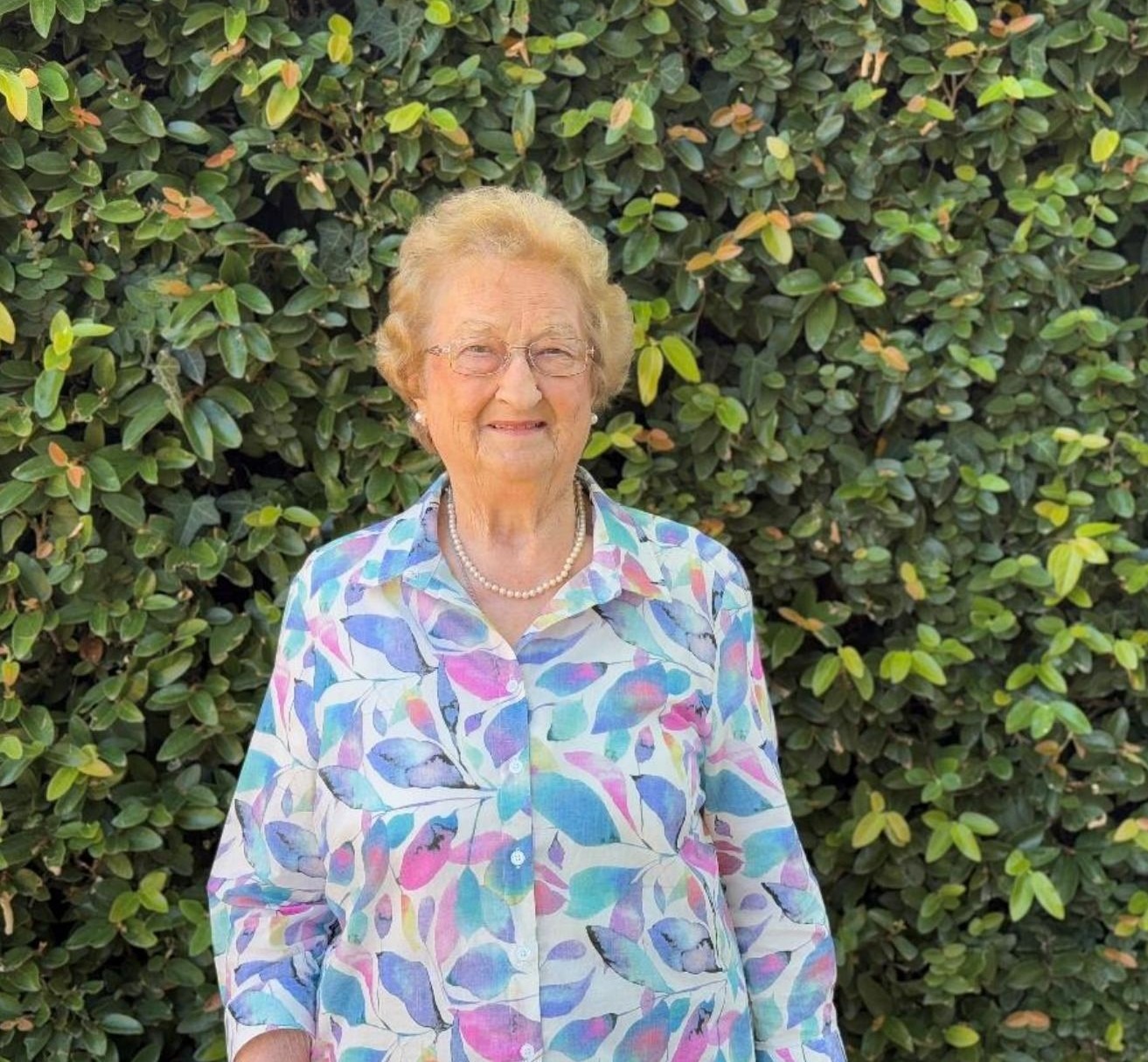
“I just thought it was the most wonderful thing that could happen to save people’s lives, and it has many times.”
Pamella Taylor, OAM
in the news

We work on Wadawurrung land
The Ballarat Foundation acknowledges the Wadawurrung people, the traditional owners of the lands and waterways in our region. We recognise their diversity, resilience, and the ongoing place that Aboriginal and Torres Strait Islander people hold in our communities. We pay our respects to the Elders, both past and present, and commit to working together in the spirit of mutual understanding, respect and reconciliation.
The Ballarat Foundation is committed to fostering a diverse, equitable and inclusive community where everyone is welcomed, respected and empowered to thrive.